


After the Second World War, because Europe was so divided destroyed by war, the United States brought the idea of a united Europe in front of the European leaders. This idea, which wandered the European minds for centuries, because of the historical consequences, did not change the way Europe was organized until the end of the 20th century.
Here is when the US made its great contribution to the reformulation of Europe. Through the Marshall Plan, the USA offered financial aid to Europe which intended to speed up its economic recovery.
In 1951 the European countries reached a consensus and laid the foundations of the European Coal and Steel Community. Six years later, two more communities were founded: the European Economic Community (EEC) and the European Atomic Energy Community (EURATOM). Since their formation, the economic development of the Member States took a raising path. As a result, a series of treaties have been signed which ensured the transformation of the Communities into the European Union we have today.
In time, because the member states of the Communities have been able to show that their cooperation is working and that it encouraged their rapid economic growth, other European countries have joined the Organization.
EU accession model
The accession to the EU is a long process in which the country that wants to become a member of the community participates in a series of negotiations, which in happy cases end with obtaining membership in the organization. Because these negotiations last, and because the final result depends on the degree of adaptation of the states to the European rules, usually the accession is a group process. For this reason, the EU enlargement took place in waves.
The first wave of enlargement of the European Communities was in 1973 and included the following group: Denmark, Ireland, and the United Kingdom. Then, the second wave of enlargement happened in 1981, when Greece joined the Communities. The third wave of enlargement was about Spain and Portugal, which joined the organization in 1986, this being the last wave of enlargement of the European Communities.
In 1995, following the foundation of the EU under the 1992 Maastricht Treaty, the third wave of EU enlargement happened towards Austria, Finland, and Sweden. This wave was followed by the largest EU enlargement to Central, Eastern, and South-Eastern Europe, namely the 2004 enlargement to Cyprus, Estonia, Latvia, Lithuania, Malta, Poland, the Czech Republic, Slovakia, Slovenia, and Hungary.
In 2007 the group formed by Bulgaria and Romania joined the Union, and in 2013 Croatia was the last country to join the organization.
As we can see, the EU accession negotiations involved the formation of groups of states, which, in addition to the simultaneous negotiation of the association agreement, also borrowed from each other good practices in order to comply with the European policies.
A new group to join the EU?
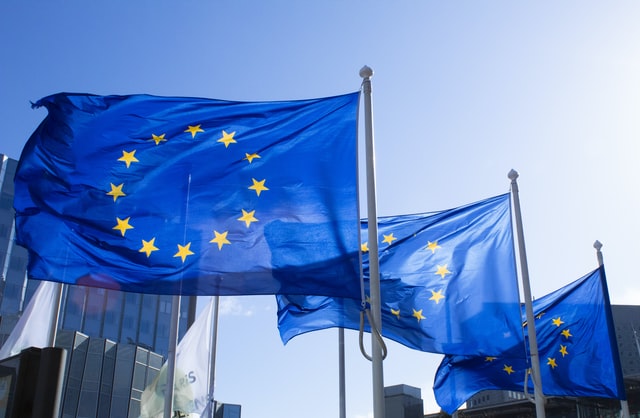
The list of candidate and potential candidate countries is long. However, in the last years, the Union had serious talks with neighboring states such as Moldova and Ukraine.
The Union’s ability to expand into Eastern Europe, including Georgia, has been enhanced through these countries’ efforts to comply with the EU treaties. As a result, in the summer of 2021, the Republic of Moldova, Ukraine, and Georgia signed a joint declaration at the Batumi International Conference, in which they stated their commitment to move forward in the integration process for accession to the Union. As a result, this group has been called the “Batumi group”, and is treated by the Union as a whole when it comes to accession.

EU and NATO enlargement to Eastern Europe
Europe’s security has always been a major issue for all EU member states, which is why the formation of a European army has been discussed countless times.
Where does the need for an army come from?
The justification for a European army has always come from the existence of two types of political regimes in Europe: a democratic one promoted by the EU, and a mixed one promoted by the Russian Federation; but also because of the existence of two military powers in Europe: the Russian Federation and the USA. These military powers divided Europe in half after the Second World War and turned it into their own sphere of influence in order to verify the military evolution of Europe and to prevent the outbreak of another World War. As a result, they came to impose their lifestyle and patterns of governance in the states they supervised.
In time, however, as the USSR weakened and disintegrated, some of Central and Eastern Europe was left without influence. By consequence, since 1991 we had multiple declarations of independence in the states of Central and Eastern Europe.
Subsequently, these states advocated joining the model of international organization formulated by the states of Western Europe. In this way, many countries that were under the influence of the USSR become members of the EU, but also joined NATO for refuge under US military power.
It should be noted, however, that the formation of NATO in 1949 presupposed a mutual agreement between the United States and the USSR regarding the non-violation of the zones of influence. That is why NATO’s expansion until the fall of the USSR took place to the borders of Central Europe. It was not until 1990 that NATO expanded into East Germany; in 1999 to the Czech Republic, Hungary and Poland; and only after the fall of the USSR it got closer and closer to the borders of the Russian Federation.
Also after the fall of the USSR Ukraine and the Republic of Moldova started discussions and negotiations with NATO for their accession to the military organization, which often seemed to be the first step towards EU integration (if we look at the model of many states in Central and Eastern Europe). However, Ukraine and Moldova are states with internal conflicts, with a divided population, and in the immediate vicinity of the Russian Federation. For this reason, these states maintained the dialogue on NATO membership only on a theoretical level, clearly emphasizing a neutral position from a military point of view.
The new international context
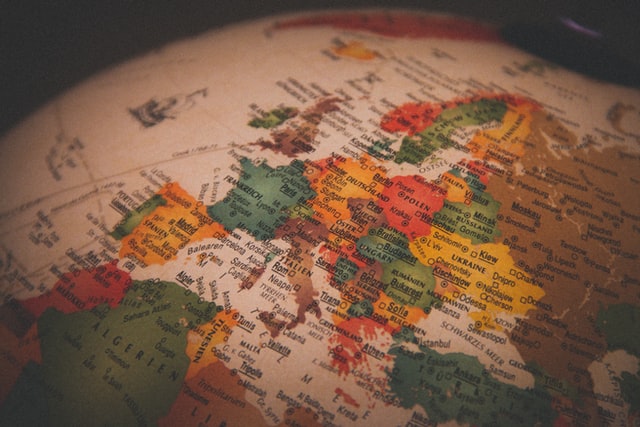
In 2014, Ukraine’s advance in talks with NATO and the EU sparked a response from the Russian Federation, which ended with the annexation of Crimea, the area where the Russian Federation had located the Naval Base since 1783, which served as a strategic point in defense and security control in the Black Sea Basin region.
Despite this, in 2022 Ukraine once again shows its tendency to align with EU and NATO, the reason that upset Moscow even more, and which resulted in a Russian war against Ukraine, a war in which Moscow seeks to change political power from Kyiv.
International perspectives
In these tense moments, we have different reactions from all the actors involved, namely:
Ukraine is asking for the help of both NATO and the EU to win the war with the intention of achieving its goal- the alignment with European lifestyle and governance. In this context, the President of Ukraine calls for the acceleration of the EU accession process.
In response, the EU supports Ukraine as stated by European Commission President, Ursula von der Leyen, and took steps for weakening the Russian Federation through sanctions and joint action of all the EU member states.
The Republic of Moldova, on the other hand, maintains a state of military neutrality in the context of the war, but votes in favor of the UN resolution for the withdrawal of the Russian army from Ukraine, and also on May 3, 2022, Moldova signs the application for EU membership.
In the context of Ukraine’s demands and Moldova’s decisions, Georgia is also discussing the urgent application of the accession request so that the group can make urgent progress in negotiations and receive financial support and military protection following the taken decisions.
Conclusions:
In view of the above, we note a strategic move of the Batumi group, namely they take advantage of the international circumstances that are weakening the Russian Federation economically and pursue their accession to the EU. This way, Moldova and Georgia can approach the subject together with Ukraine, without risking an internal conflict sustained by the Russian Federation’s involvement. History has shown that both Georgia and Moldova tried to advance one by one towards the EU, but these attempts resulted in internal wars.
Therefore, in the new circumstances, in the context in which the Russian Federation spends resources in its war in Ukraine, and in the context of the financial sanctions applied by most of the world states, the group saw an opportunity for change during the war. In view of the above, we can expect an urgent enlargement of the EU towards Eastern Europe, but also more and more tense international circumstances in the context in which the West is getting closer and closer to the Russian Federation. These reactions can lead to major changes in the international order, such as the creation of new partnerships, the establishment of new alliances, and the formulation of new international actors who wish to impose themselves.
Sources:
EEAS, 2022. The Republic of Moldova and the EU. Disponibil la: eeas.europa.eu/delegations/moldova_en/1538/The%20Republic%20of%20Moldova%20and%20the%20EU
DW, 2022. Georgia vows to ‘immediately’ apply for EU membership. Disponibil la: dw.com/en/georgia-vows-to-immediately-apply-for-eu-membership/a-60992224
Borger Julian, 2022. UN votes to condemn Russia’s invasion of Ukraine and calls for withdrawal. Disponibil la: theguardian.com/world/2022/mar/02/united-nations-russia-ukraine-vote
Uniunea Europeana, 2022. Acorduri fondatoare. Disponibil la: european-union.europa.eu/principles-countries-history/principles-and-values/founding-agreements_ro
Ion Teodora, 2021. Președinții Republicii Moldova, Ucrainei și Georgiei reafirmă printr-o declarație comună ”angajamentul neclintit de a avansa procesul de integrare în UE prin reforme cuprinzătoare. Disponibil la: caleaeuropeana.ro/presedintii-republicii-moldova-ucrainei-si-georgiei-reafirma-printr-o-declaratie-comuna-angajamentul-neclintit-de-a-avansa-procesul-de-integrare-in-ue-prin-reforme-cuprinzatoare/
Lupitu Robert, 2022. Franța, țara ce asigură președinția Consiliului UE, susține că aderarea Ucrainei este un proces care ar trebui să implice și R. Moldova și Georgia. Disponibil la: caleaeuropeana.ro/franta-tara-ce-asigura-presedintia-consiliului-ue-sustine-ca-aderarea-ucrainei-este-un-proces-care-ar-trebui-sa-implice-si-r-moldova-si-georgia/?fbclid=IwAR2Ebn6Kt2ZBNZOiVIN7eTf6jBjYrVrDbMQ-A1iMSdFFNkcMhR1qpO6ViGc