

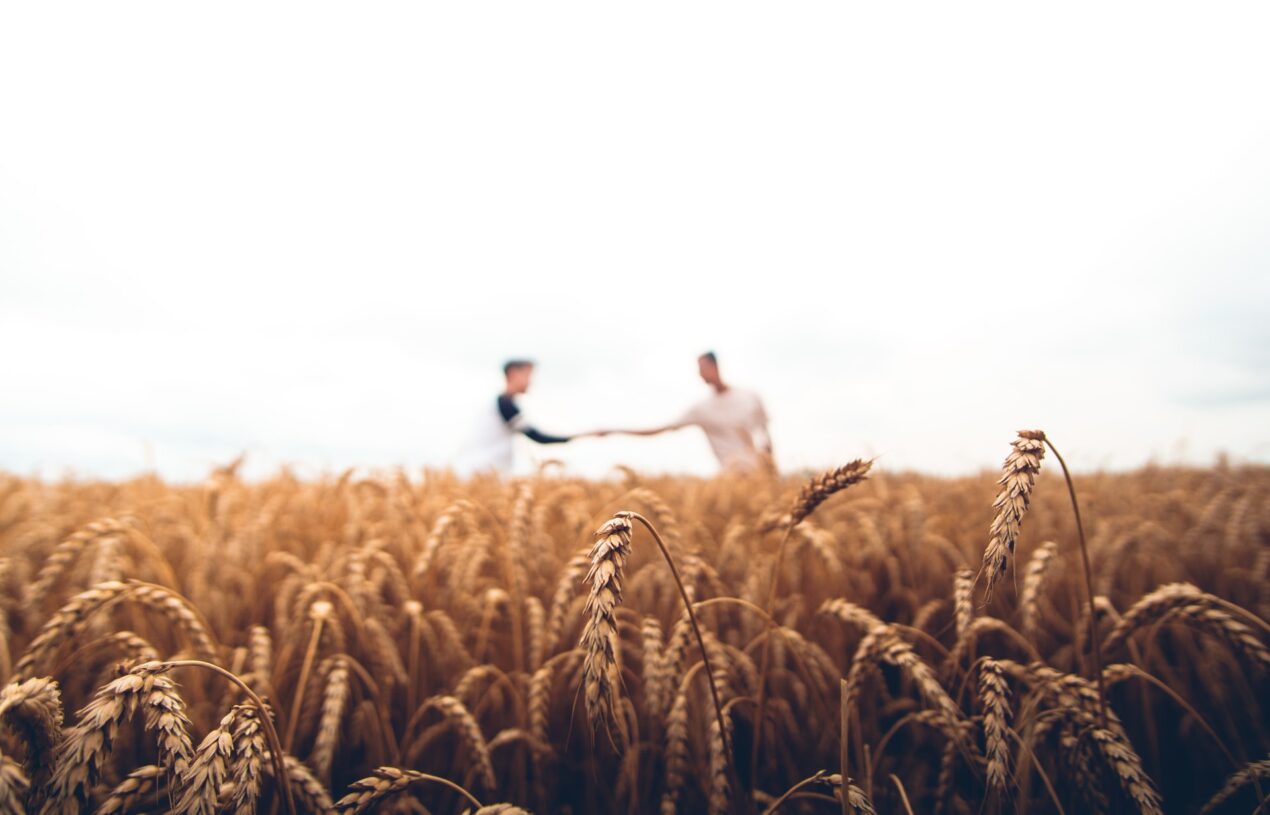
A new topic, debated both on social networks, in the political space, and in academia is the conflict in Ukraine. Before we discuss anything about this subject, you should know that in international relations (between states) there is a set of principles that have been agreed upon by all nations. This set of principles has different names in each country, but it refers to the same things, namely: mutual respect for sovereignty and territorial integrity; non-mutual aggression; non-involvement in the internal affairs of another state; equality and common benefits; and most importantly, peaceful coexistence.
What must be mentioned, is that the first four principles can be sacrificed to ensure the last one- peace.
Many times, out of pride and interest, states arrive at war triggered by the statements by politicians and officials. Mostly, their official speeches are written by intelligent people, by specialists in international relations, diplomacy, politics, economics, and many other fields, to guarantee the transmission of a good message. But, sometimes the officials deviate from the subject and express some of their personal opinions and beliefs, automatically transforming them into statements of an official position of the state.
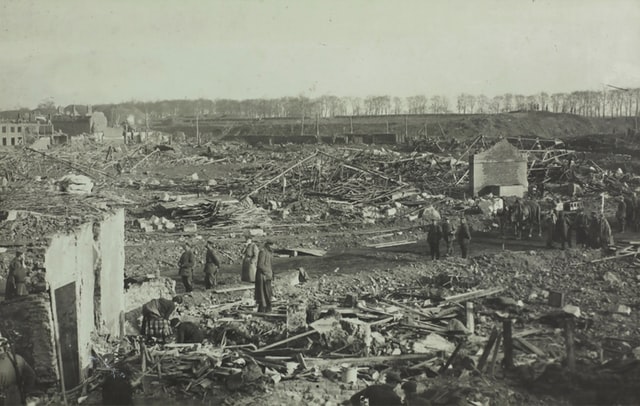
Regardless of the circumstances, we must not forget the history and the fact that war brings damage to all parties involved, and in no way helps the ordinary people. Because of war, people will live a few years in fear, hunger, and declining quality of life.
Also, those who lead us never feel the damage of war as we, the ordinary people feel them. They sent their children to schools and universities in Europe or America, they have high salaries and bank accounts in other countries, and at any time they feel in danger they can seek political asylum in another country. We do not have all these privileges, and for our own good, the millions of people who really work, it would be good to influence our political classes to advocate for peace.
What is a country?
From an early age, we were taught about our countries. We were thought to see it as a construct we must be grateful for because it gives us all we have. And starting from this, we were trained with a sense of duty for our countries. But what exactly is a country?
A country is the totality of the people who speak the same language, follow the same rules, and have the same culture. These people, work all their lives to make it possible to have the life we have. Thus, our countries are not political leaders, are not a president, a country is you, me, our parents, our grandparents, our ancestors, and all the people who agreed to work so that we can have everything and live in peace. So, if we have a duty to our country, it is to be good people, to respect our ancestors, and to work as good as we can in the role we assumed since we became citizens. Some of us assumed the role of builders, others of doctors, teachers, bakers and so on. Only some of us have taken on the role of soldiers to protect all people if there is any aggression from other states, or from the government!
The rules of war
Given the way society is built, the war has been turned into a game with concrete rules whose application is pursued by the entire international community, and especially by the Nuremberg War Tribunal, Tokyo War Tribunal, The International Criminal Tribunal for the former Yugoslavia, The International Criminal Court for Rwanda and the International Criminal Court in The Hague.
The main rule of war is that the army is not allowed to open fire on civilians unless civilians engage in military action. So, if war has started in a country, the army will the one to stand up to the ones attacking. If the army will not be able to defend the country, the civilians, who are not prepared for war, must be peaceful and accept defeat. Otherwise, if the civilians get involved in the war, by the rules, the attacking army is going to be allowed to fire on civilians.
From this point of view, I strongly hope that the civilians of Ukraine did not engage in anyone’s military and political games just to be collateral victims.
Alliances
In any war, there are alliances. After the 2nd World War, in Europe was founded a military alliance -NATO, which currently includes 30 Central and Western European states and the United States. This alliance has continued to expand since 1949. Although the goal of NATO’s formation was to ensure peace in Europe, it has expanded more and more to Eastern Europe. It initiated a special dialogue with Ukraine on joining the organization since the 1990s. This collaboration has deepened, which obviously upset one of the world’s military powers- Russia, which after the 2nd WW has claimed influence over Eastern Europe.
With this in mind, there is no wonder in Russia’s response to NATO’s rapprochement to its borders. It underlined its position on this subject since 2014 with the annexation of Crimea and Sevastopol, territories in which it had a military base for hundreds of years. In 1783, the Russian Empire completed the construction of the Sevastopol military base and used it for defense in the Black Sea area. Therefore, it is not surprising that Russia reacts when it comes to bringing another military power in areas where it has control.
But the most important thing is that despite Ukraine‘s dialogue with NATO, it is not a member of the alliance, to have hoped for military support in the event of a conflict in response to Russia. Moreover, many European countries already members of the alliance have fears and doubts about the launch of Article 5 of the Treaty invoking the principle of solidarity and common defense. This is due to the fact that the key principle in international relations is peace. Each state will seek to protect its citizens, which is why the United States entered World War II so late in December 1941, when the war began in September 1939.
Therefore, from a military and strategic point of view, when the officials of Ukraine expressed their political positions, they should have taken into consideration that in a conflict Ukraine may be in a one-on-one battle with one of the largest military powers in the world.
Areas of influence
After World War II, the victorious powers divided the world in matter of physical boundaries, but also in matter of areas of influence. In this way Central and Western Europe remained under US influence, several Central and Eastern European countries remained under Russian influence, Asia was also divided into areas controlled by both powers, as well as Africa. The division of the world into zones of influence was made with the intention of following the national decisions of the states and preventing the outbreak of another World War. In 1991, however, the disintegration of the USSR took place, which generated various political reactions and the appearance of many countries on the world map. This could not go unnoticed by the United States and the developing military and economic powers. As a result, the area of influence of the USA extended slightly towards Eastern Europe, as close as possible to the Russian Federation.
Now, as Europeans, we must know that the United States has not suffered nearly as much from the Two World Wars as Europe has suffered. Therefore, any wars that are not held directly on its territory may even be of economic and military interest, with the idea of expanding the area of interest and increasing the profit from the trade with military armament. In the light of these arguments, Europe must avoid war at all costs.
The population
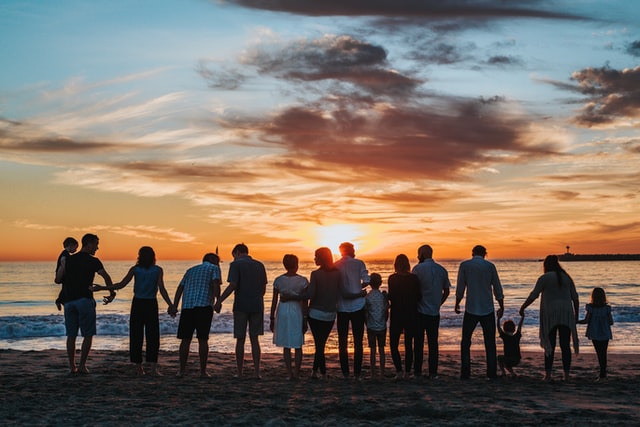
After World War II, the USSR used one of the best strategies to control its spheres of influence, namely the creation of Russian communities, called buffer zones, which we now call separatist zones. When the army withdrew from Europe, the Russian soldiers and civilians settled in masse in various areas. These communities received aid from the USSR and later from the Russian Federation since World War II. Some of the most prominent areas, which advocated for their independence, are Kosovo in Serbia, Transnistria in Moldova, South Ossetia and Abkhazia in Georgia, and Donetsk and Luhansk in Ukraine.
Citizens of these regions receive free or reduced-price gas from the Russian Federation, participate in various cultural events organized by the Russian Federation, have Russian as their mother tongue, education is mostly held in Russian, and so on. These people are living a special reality, they are Russian. Their interests are defended by Russia and based on this argument, Russia claims the right to intervene in these areas to defend its citizens (many of them even have Russian citizenship).
Of course, if we were a nation-state we would tend to be upset about this attitude, but what right do we have as a national state over a territory if the citizens living there, who do their activity there, really have nothing to do with our rules, ideas, and principles of life? Are we entitled to take their land? Isn’t it my fault as a national state that I didn’t offer them a better alternative? Do I have the right to expel them from the territory where they live just because I have political power?
If the answer is yes, then let’s talk about other countries too. We have also the Kurds in Turkey, that are already under state abuse, or similarly, there are the Palestinians in Israel. So, whose side are we on?
Republic of Moldova and its official position
There are discussions in the public space regarding the neutral position that Moldova takes towards the conflict in Ukraine. Some criticize this position, others praise it. The answer is – we have no choice! We don’t choose our neighbors! We are a people who have a separatist zone, which has recently gone through military conflicts (1990-1992), and which we cannot advocate for any official position being a small country. We are not an economic power to impose ourselves through economic methods, we are not a military power to answer for, we are not big producers of anything, we are not part of NATO to hope that they will help us in case of conflict. We are a simple strip of land, with people who want a better life. And a better life is made with working people, not with politics!
Moldova has also been in serious talks with NATO and the EU for a long time, but its regional position is neutral. We are learning to live like Europeans, we are learning to live their lifestyle, but militarily and politically any decision that could bring the US closer to Russia does not end in peace for us, the citizens.
Conclusions:
Citizens, be they from any country, should always advocate for peace and security for the future of their children. Any involvement in the war of unprepared civilians results in their transformation into numbers in history books.
Military games are not for ordinary people who want peace, they are for those with influence, power, and money.
Sources:
Rochester Martin, 2011. Fundamental principles of international relations. Politička misao, vol. 48, no.1, pp. 257-262
Stroe Iulia, 2014. Tribunalele internaționale de război -de la Nürnberg la Haga. ABC Juridic. Accesible la: abcjuridic.ro/tribunalele-internationale-de-razboi-de-la-nurnberg-la-haga/
NATO, 2020. Member countries. Accessible at: nato.int/cps/en/natohq/nato_countries.htm
United States Department of State, 2020. Lend-Lease and Military Aid to the Allies in the Early Years of World War II. Accessible at: history.state.gov/milestones/1937-1945/lend-lease
NATO, 2022.Collective defense – Article 5. Accessible at: nato.int/cps/en/natohq/topics_110496.htm
John Graham Royde-Smith, 2020. World War II 1939–1945. Accessible at: britannica.com/event/World-War-II/Forces-and-resources-of-the-European-combatants-1939
Enciclopedia Britannica, 2020. Sevastopol, Ukraine. Accesible at: britannica.com/place/Sevastopol