

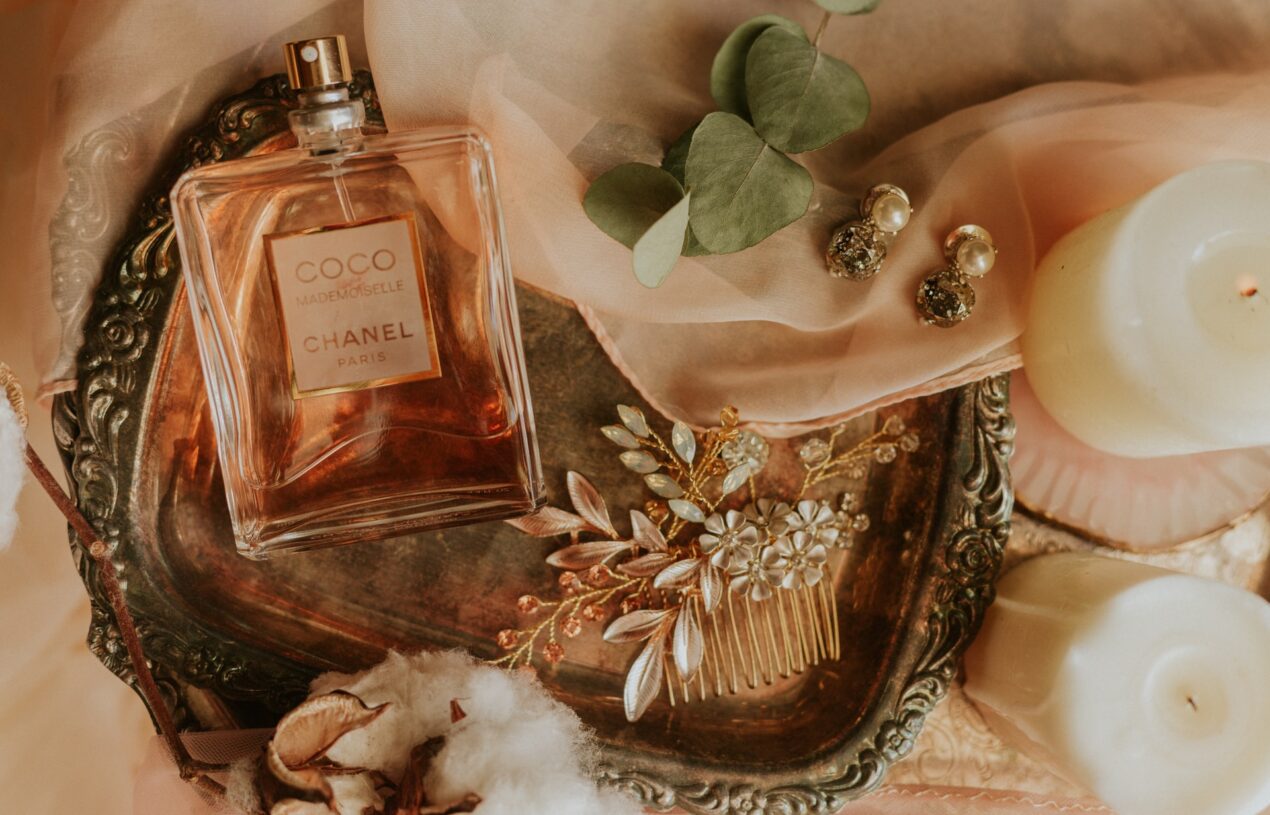
Have you ever wondered why we like and some perfumes and why we don’t like others?
It often happens that we have difficulty in choosing a perfume. Some of them we like but others seem too strong or smelly. However, it is very rare and almost inexistent situations when we meet people that wear perfumes that smell ugly.
Thus, what happens to the perfumes from the stores when we were them?
Studies show that the scents of perfumes are different from when we put them on ourselves. The reason this happens is both because of our body odors and because of the pheromones that each of us has. Accordingly, the same perfume smells completely different on us compared to how it smells on our friends.
Why do we have different body odors?
– Diet
One of the main reasons why the smells of our bodies differ from one ethnic group to another, from one race to another, and from person to person is diet. Depending on what each person eats, the smells of his body will be outlined.
Each of us has on the surface of the body a layer of bacteria that feed on the substances we sweat, and as a result of the metabolism of these bacteria will eliminate odors, which we will perceive as our smell. For this reason, diet counts in the natural smell we have, for example, if we eat a lot of raw garlic or onions, we will have much more pronounced and ugly smells than usual. Likewise, consuming too much sugar will cause strong body odors, alcohol, spicy products, and so on.
– Health status
Another factor that will influence our body odors is our state of health. Depending on how healthy or sick we are we will have certain odors. It is known that people with diabetes have a certain smell, people with hormonal problems such as hyperthyroidism or decreased estrogen levels (especially in menopausal women) will see changes in body odors, people with liver or kidney problems have distinct odors.
– Use of certain medicines
Some medications can make us sweat more, which will intensify body odors, but some with certain chemical compounds can cause our body odors to change, to become more intense and ugly. For example, zinc supplements will cause a change in odor.
– Psychological health
Psychological health is strongly linked to hormonal balance, therefore stress and psychological pressures will eventually be observed in the smells we have. Also, we must count the states of fear, competition, or mental effort that will increase the production of sweat. All the psychological pressures will create a distinct smell of our body because they will influence the hormonal balance and therefore the balance of the chemicals in our body.
– Physical activity
Physical activity is a key factor in increasing body odors as it intensifies sweating.

What substances our body eliminates?
What we call sweat is actually a liquid produced by the sweat glands. It is composed of minerals such as potassium, urea, lactic acid, salt, protein, and ammonia.
These substances that our body eliminates have no smell. The smell occurs when bacteria on our body break the acid bonds in sweaty fluids, but also from the bacteria waste. Basically, our smell is formed by the bacteria on our body, and for this reason, we must follow the internal chemical balance because it will influence the quantities and chemical compounds eliminated by our body and respectively the smell we will have.
The diet of our ancestors and our smells
Researchers have found that our bodies tend to have a so-called “metabolic memory”, which is related to the diet of our ancestors. If they abuse fatty products, there is a risk that we may find it harder to digest high-fat products. This directly influences our body odors. Moreover, a recent study has shown that the same diet for several generations will make the future generations attracted to the same smells (see Pavkovic-Lucic Sofija et al, 2016; Collins Simon, 2015).
With this in mind, the smells of our body and the types of pheromones will depend on both our diet and the diet of our ancestors. This will make us later attracted to certain smells and people with certain smells. All this will also make us feel uncomfortable being around people with some specific smells.
Gender
According to the Center for Social Studies, in 2009 several tests were performed which showed that women have a higher sensitivity to smell than men. This means that women can feel a wider and more subtle range of scents than men. This difference is outlined from birth. However we must understand correctly, women will smell more smells than men, but this does not mean that they will feel all the smells. There are odors that only men are sensitive to, but not women.
Also, we must mention a study conducted in Jerusalem, that established the ability of women to differentiate between adults and children using only smell. However, both men and women are able to recognize their own child and life partner only by smell.

Body changes and sensitivity to smell
Studies show that women are more sensitive to smell because they have more changes in the body triggered by the menstrual cycle. This is why throughout life women go through a lot of hormonal changes and why their own smell change often. The changes they have, make them sensitive to certain smells. For example, during ovulation women have an extremely high sensitivity to male hormones, i.e. 10,000 times higher than the rest of the time.
Perfume choice: individual choice or natural preference?
Perfumes have been used for over 5,000 years, which may lead us to believe that perfume preferences are more of an individual choice than something that depends on the history of the ancestors, the living area, our diet and that of our ancestors, diseases, or individual odors and our sensitivity to smell. However, a recent study shows that our choice of perfumes depends on the perfume ingredients that may have a certain biological significance. For example, the ingredients of perfume may be similar to the major histocompatibility complex (responsible for encoding proteins on the surface of cells that help the immune system to recognize foreign substances. It plays an important role in smell as it influences the smell of our body and the choice of life partner taking into account the smell of our body and the smells of others). Then, naturally, every human is able to recognize by smell whether a human is a man or a woman, for this reason, perfumes are of two types for women and men, as they contain odors that are associated with gender.
Then, our choice is not necessarily something related to reason, but something instinctive, we usually choose a perfume whose ingredients match any of the smells of our body, which will make us feel comfortable wearing it.

Conclusions
Perfumes never smell the same on our bodies as they will always combine with our scents and will be special. For this reason, one and the same perfume can smell different on us compared to how it smells on our colleagues. Our attraction to perfumes is guided by our scents, which has nothing to do with the conscious, but rather with our inherited competencies from our ancestors to differentiate between scents. So, when we choose a perfume we must understand that some of them are not ugly, they are simply incomplete, and will be complemented by certain smells of somebody.

Sources:
Abramowicz Magdalena et all. (2020). Sweat or not to sweat – that is a question. Technology Org, https://www.technology.org/2020/12/28/sweat-or-not-to-sweat-that-is-a-question/.
Barrell Amanda. (2020). What causes a sudden change in body odor? Medical News Today, https://www.medicalnewstoday.com/articles/sudden-change-in-body-odor.
Britannica, The Editors of Encyclopaedia. (2021). Major histocompatibility complex. Major histocompatibility complex, https://www.britannica.com/science/major-histocompatibility-complex.
Cleveland Clinic. (2018). Sweating and Body Odor. Cleveland Clinic, https://my.clevelandclinic.org/health/symptoms/17865-sweating-and-body-odor.
Collins Simon. (2015). What we eat affects future generations. Nzherald, https://www.nzherald.co.nz/lifestyle/what-we-eat-affects-future-generations/NREDMK7DTT53UIOEPG5L2GCUMY/.
Elmer Jamie. (2019). Why Has My Body Odor Suddenly Changed? Healthline, https://www.healthline.com/health/sudden-change-in-body-odor.
Fox Kate. (2009). The smell report. Social Issues Research Centre, https://www.wierook.nl/docs/smell.pdf.
Janeway CA Jr, Travers P, Walport M, et al. (2001). Immunobiology: The Immune System in Health and Disease. 5th edition. New York: Garland Science, https://www.ncbi.nlm.nih.gov/books/NBK27156/.
MedExpress. (2019). 7 things your body odor might be trying to tell you. MedExpress, https://www.medexpress.com/about/newsroom/2019-press-releases-media-coverage/medexpress-unusual-body-odor.html.
Milinski Mangred, Wedekind Claus. (2001). Evidence for MHC-correlated perfume preferences in humans. Behavioral Ecology, vol.12, no.2, 140-149, https://watermark.silverchair.com/120140.pdf?token=AQECAHi208BE49Ooan9kkhW_Ercy7Dm3ZL_9Cf3qfKAc485ysgAAAsgwggLEBgkqhkiG9w0BBwagggK1MIICsQIBADCCAqoGCSqGSIb3DQEHATAeBglghkgBZQMEAS4wEQQMlN3cmgYRukXG607KAgEQgIICe_eHw0zUt3_c-M4dnrTViwKarP8bLx3FHyxjqQF.
Pavkovic-Lucic Sofija et all. (2016). ‘Does my Diet Affect my Perfume?’ Identification and Quantification of Cuticular Compounds in Five Drosophila melanogaster Strains Maintained over 300 Generations on Different Diets. Chemistry & BiodiversityVolume 13, Issue 2, pp. 224-232, https://onlinelibrary.wiley.com/doi/abs/10.1002/cbdv.201500064.
Rekstis Emily. (2020). Left Armpits of Left-Handers Smell Better — and 16 Other Sweaty Facts. HealthLine, https://www.healthline.com/health/sweat-what-is-it.
Thornhill Randy et all. (2003). Major histocompatibility complex genes, symmetry, and body scent attractiveness in men and women. Behavioral Ecology, Volume 14, Issue 5,, pp. 668-678, https://academic.oup.com/beheco/article/14/5/668/186534.