

In the 90s, mass migration from the Eastern European states to the Western ones began. This is how out of a population of 2.6 million citizens of the Republic of Moldova (according to 2020 data), between 1.11 and 1.25 million are abroad (according to the Ministry of Foreign Affairs of Moldova).
Romania is in a similar situation: out of a population of 19.29 million (in 2020), 9.7 million are legally established outside the country. The first waves of migrants from Romania and the Republic of Moldova are our parents and some grandparents, who left in search of better jobs to help their children grow up. However, after 2000, the waves of migration intensified, and now the children were the ones to leave these countries.
Although the whole family moved to Western Europe, and often in the same city, the lifestyle of the parents and grandparents is quite different from the lifestyle of their children. Many things changed regarding lifestyle, professional aspirations, and trends in personal life, cultural development, and others. Let us see what changed and how the young generations can inspire us.
Spartan Italy competition, 2022: an interview with Anatolie Chistol and Petru Armanu
D: Hello guys. From what I saw, the Spartan competition is the biggest obstacle sports competition in the world. It appeared in 2007 and currently includes over 30 countries and 6 types of events in 3 series. Among these events are the 5km run with 20 obstacles, 15 km with rugged terrain and 25-30 obstacles, and others. So, this is an intense sports competition, which requires serious training. What motivated you to participate?
A: Look, the idea is simple: the strong point of this competition is the feeling of adventure. Even if it is difficult, because I would describe the competition as an exam for the military, it was still a very inclusive competition with different people who were happy to participate.
P: I agree with the adventure, and I would say it is also about adrenaline and competition, about testing yourself and checking your physical and mental strength. There is also curiosity: would I resist, achieve, and conquer? So, this competition is about adventure and self-evaluation.
D: What specific event did you participate in?
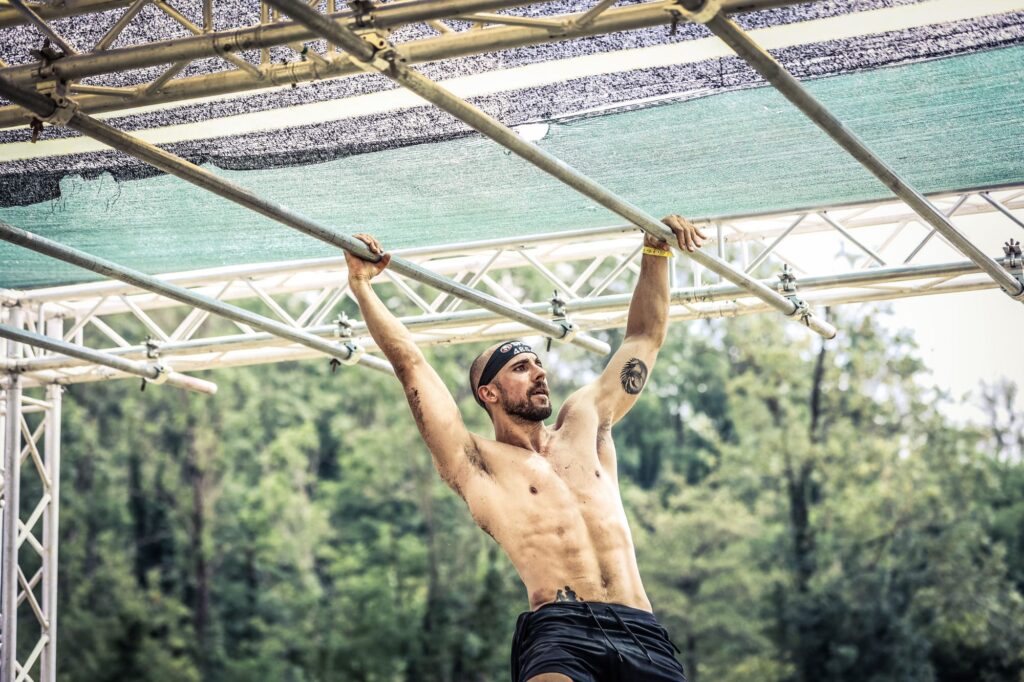
P: I participated in 2 events. The first one was the 10km race, where I participated together with my sister, and I helped her a little. And the second one was the 5km race, where I clearly had the intention of measuring my strength, even though I didn’t do any special training, and I do sports only for physical health.
D: Can you tell me more about the physical exercise, if it helped you, and to what extent?
A: In my case, no special training was needed. Yes, I was more than happy about this race, but I do this kind of training every day given my professional activity. Training like this is my job and my hobby. So, it was quite easy for me in this competition.
P: I wouldn’t say this competition was extremely hard. I saw in it a way to free yourself emotionally and physically. In everyday life and in personal life we have different moments, and competitions like this give you the chance to release yourself from stress and also to check your strengths and physical limits.
A: Look, I would somewhat compare this competition, just as an idea, with the school competitions organized by the physical education teacher, where we had to run between the shelves, roll over the mattress, climb the rope, jump, etc. This competition gives you about the same feeling and adrenaline, only on a different level.
D: It seems that this competition is a good exercise of attention, concentration, and coordination.
P: Yes. We ran the first 3 km on the mountains without stopping; a combination of adrenaline and enthusiasm. It was complicated, and in extremely hot conditions, because we started the competition at 12 AM, at 40°C. Yet, we had to focus and finish what we started.
D: What did the families think about your participation in the race?
A: My family supported me. They know I like this kind of thing. It was an experience almost like jumping with a parachute. So they said to me: Go and try!
They wished me luck; they were optimistic and open, encouraging us to try. In the end, we proved to be very good. We ranked very well, especially since we participated for the first time. I think if we had trained specifically for this competition, we would have had even better results.
P: My family supported me too. Even more, a sister of mine participated with her husband in the competition.
D: Have you ever experienced the feeling that you are physically weak, but mentally you can’t stop?
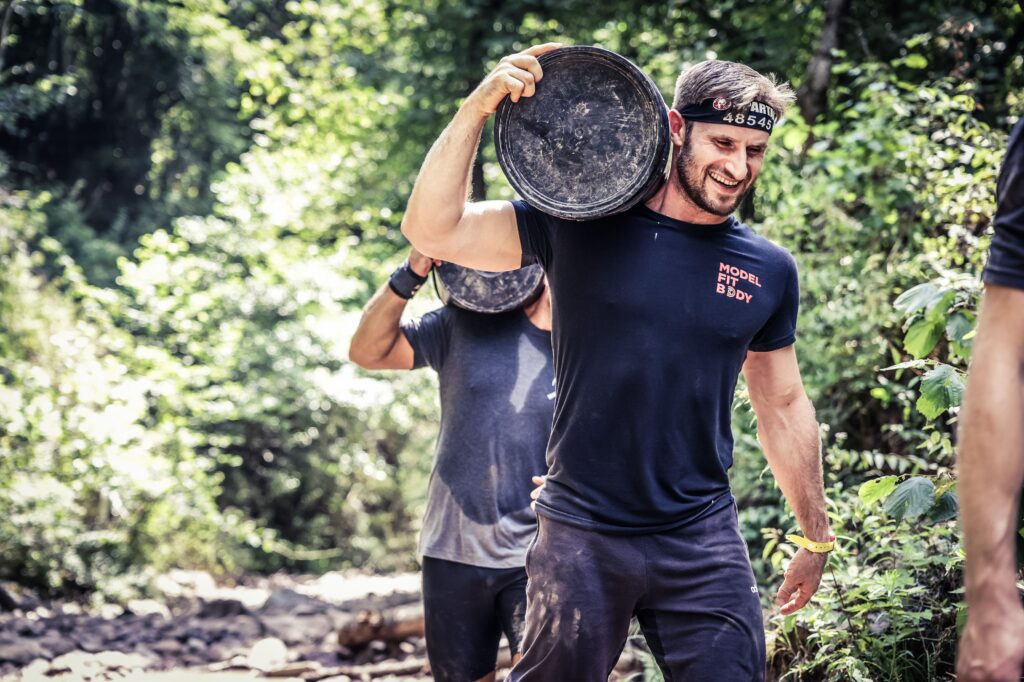
A: Yes, of course. This is exactly what made us take the competition to the end. We have to admit that the competition was not easy; we had to run up the mountains, carry sandbags, and much more. But even if the body seemed tired, when you have the mental determination to continue, the body adapts.
P: I agree. For me, the situation was a little different because I had a hip muscle injury in the past, and after about 3 or 4 km, I started to feel pain, but I made it to the end. I had one goal in mind: to finish the competition.
A: Some participants abandoned the competition, mainly because of the heat. But we set out to reach the finish line and we did it in a very good time.
D: At one point, Anatolie, you gave an interview to national television, after you took one of the leading places in “Mister Italia”. In that interview, you said that the competition was difficult, especially because you were always seen as a foreigner. Did you feel the same attitude in this competition?
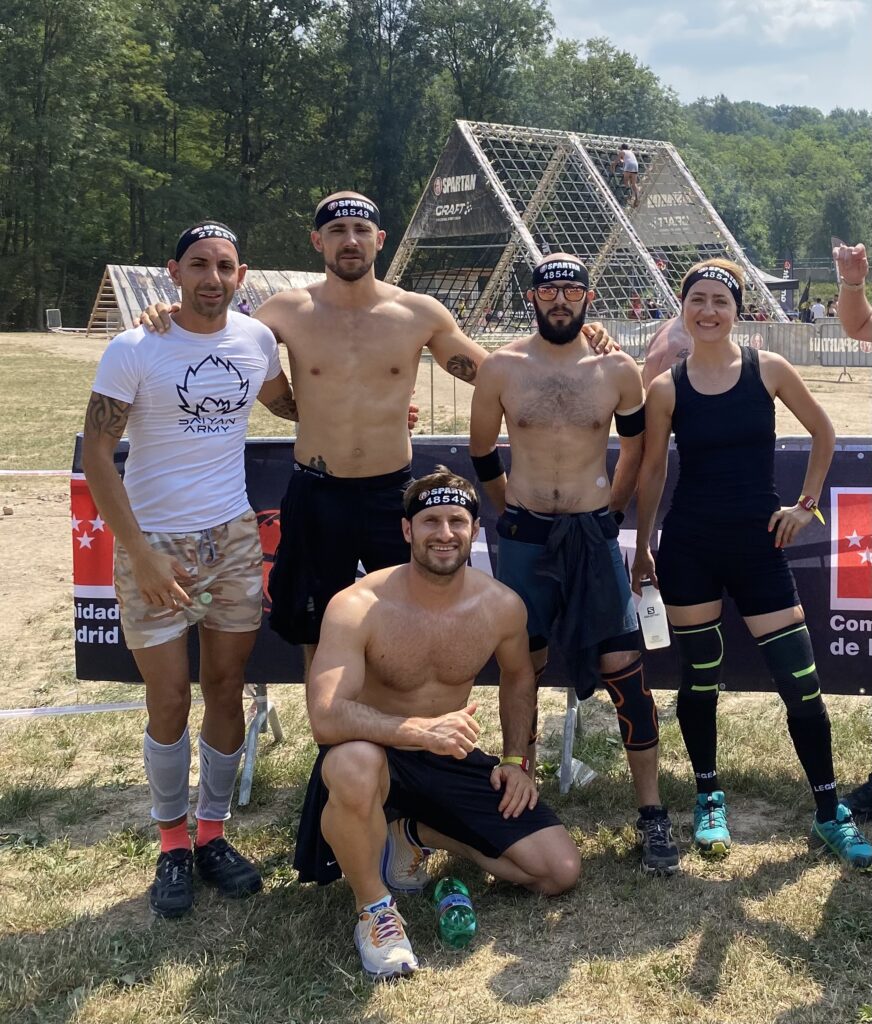
A: No, not at all. This race is so friendly. Different people participated here: thin, fat, disabled, men, women, foreigners, etc. Everyone helped each other; somehow it gives you team spirit. Even if we all competed, we helped each other.
D: What you want to say is that sport eliminated all criteria of social, ethnic, religious, cultural differentiation, and so on, so it made you act as a team instead of dividing you.
P: Yes. It kind of brought us together. There were all kinds of foreigners: English, French, Spanish, all kinds of people.
A: You have to see how strangers help each other. But what surprised me was that there were many participants from Moldova, even parents of people my age.
P: Yet, this competition is not easy. There were also unfortunate cases the situations of those who did not know when to stop, and who did not have any physical training. I wouldn’t recommend taking this competition as a joke. You must have at least a minimum of training, to know your strengths. We never participated in Spartan race before, but we were informed about the competition and knew what we were getting into.
D: In the end, were you satisfied with your results in the competition? How did you feel during the competition? Did you need help or not?
P: Yes. I am really satisfied. I remember that after drinking water for the first time since the start, I felt energized, I felt alive. I was really glad that I made the decision to participate.
A: You know, when you look from aside you may think you wouldn’t make it. But then, you reach the obstacles with all this fear, and then you do it. You exceed your expectations. It is amazing. It increases your self-esteem; it’s a nice feeling.
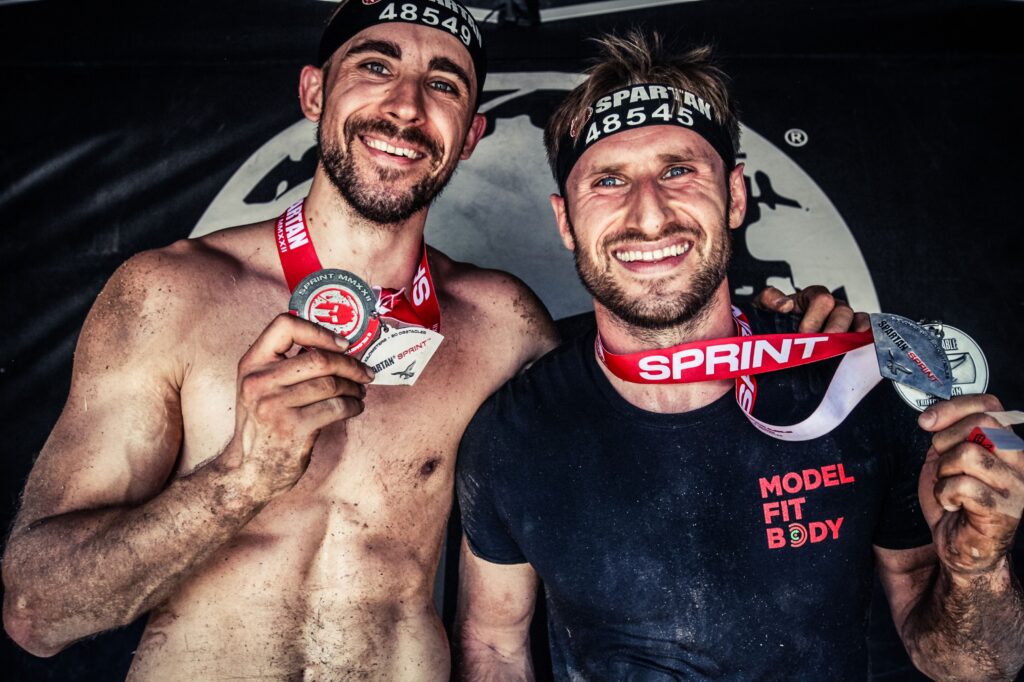
P: I agree. At one point we had to climb a 5m rope and ring a bell when we reached the top. When I looked at where that bell was, I wondered where I was going to get strength from, because my hands and feet were already tired. But slowly, I reached the top, I gave a hand to the bell… I couldn’t believe that I did it. I felt incredibly good.
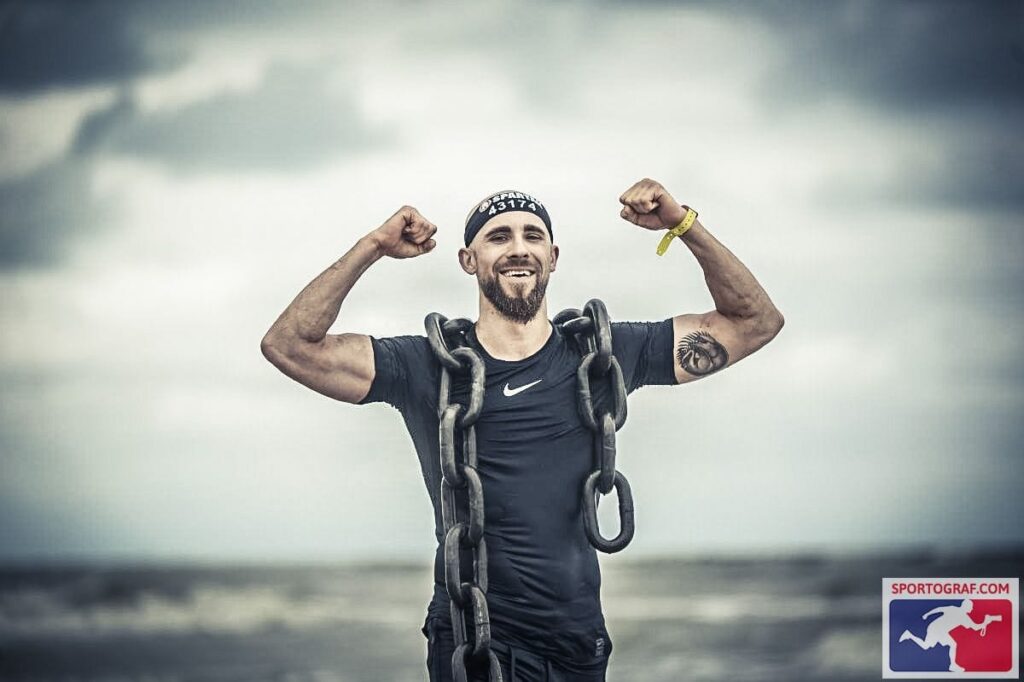
A: You get such a boost of adrenaline. Once you pass an obstacle, you stop for a few seconds, amazed of your strength. Then you focus again and move on to the next one. Sometimes I searched for something more difficult, to challenge myself.
D: Did you somehow see this competition as an opportunity to change something in your personal life? Like a new beginning?
P: For me, in a way yes, because I realized that life should not only be about work but also about beautiful moments in which you feel alive. What’s the point of money and life if you don’t feel like you’re living? Yes, it is fun, but it is also personal development, it is much more than a competitive sport. I think I will continue to do this; I will devote more time to myself and my family than to my job.
A: I think you want to draw a parallel between the lifestyle of our parents and ours. Look, the difference is the following: we were much earlier introduced and adapted to this culture, to the lifestyle here. When our parents came here, they were seen as foreigners for a long time and their adaptation was more difficult. In my case, however, I feel free. I mean, it doesn’t matter what environment I’m in and that there are more Italians, I’m ok with that, for me it’s normal.
And I, like Petru, see things differently. I still work, but for me, money is not an end, but a means. I focus on trying new things in life. Otherwise, if I focused only on getting money, I think I would end up: full of money and unhappy with money. Because I simply wouldn’t have lived!
P: Yes, there are critics from parents from time to time that we spend money on trips and other things. But my question is: otherwise, why do I collect the money?
A: I agree. You must work to support yourself, but also to live.
D: You suggest that it would be good for people to work and live not only in the sense of survival: not only to eat; but to live in the sense of seeing a little of the world, or trying new things, or learning things.
P: Many of those who come abroad, with the intention of working, stay here their whole life and just work. It is difficult for them to see the country they came to work in as an opportunity to get to know a culture. In our case, since we arrived in Italy, we could not bear the idea that from the age of 20 we would live in this country only to work, we also wanted to live.
D: Petru, Anatolie changed his lifestyle many years ago. Did he motivate you to do the same thing?
P: Yes. Since his collaboration with Herbalife, he motivated me to eat healthy. He explained to me how I should see food and what I should get from it, in terms of health. Obviously, I didn’t exaggerate before with the cakes and candies, but I also didn’t exaggerate with the new diet either. I mean, I have a normal way of life, I would say. Then, from the point of view of physical exercise, Anatol helps me. I train with him; he is a point of reference for me. So yes, I was influenced by his lifestyle changes.
D: Are you happy now? Do you like the life you have?
A: I am very happy. I really work a lot, but work means gathering results too. After so many years of work, I started to notice results and I’m glad that I was persistent in my choices.
D: I’m glad that things have reached this beautiful point for you. Have you noticed if your lifestyle came to influence your friends and their lifestyle?
A: Yes, and no. We motivated some of them, but of course, everybody decides for themselves.
D: You told me about how the Spartan competition was a great adventure but at the same time a change of perspectives on yourself. Are you going to apply this positive and curious attitude in everyday life?
P: Yes. But look, we already did things differently. One of my sisters was at the competition; I’m already trying to motivate my middle sister too. I’ve been doing sports for a long time, I eat healthy – that is, it wasn’t the competition that made me change, I changed first.
A: I agree. Our mentality changed first and then the competition followed. In my case, I changed a lot in my personal life years ago, when I gave up a job in exchange for a job that makes me happy. So, I would say that first was the change in our mentality and only after that we thought of the competition. If we didn’t decide to change something in life, we probably wouldn’t have gone to the competition.
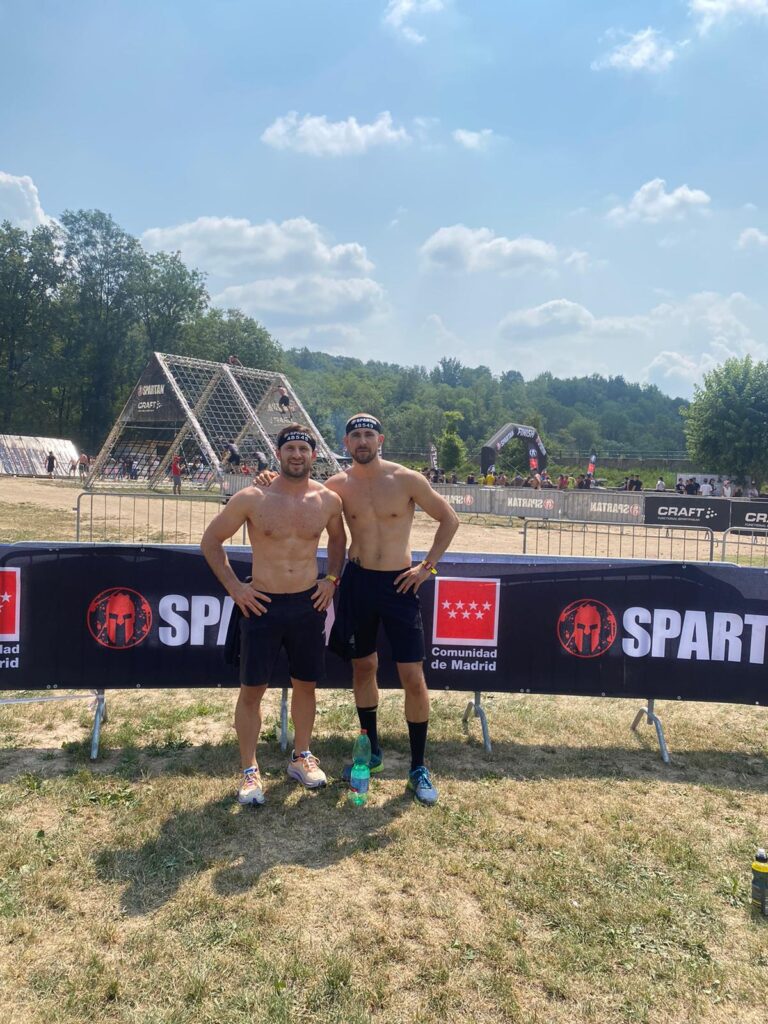
Interview conducted and translated by Doina Gavrilov